
Secure stablecoin storage requires protecting the signing keys, limiting spending permissions and preserving a usable recovery and exit route. A hardware wallet can help isolate keys, but it does not guarantee the token’s peg, issuer reserves or freedom from administrative restrictions.
Begin with how the funds will be used. Money needed for regular payments has different access requirements from a reserve holding. A storage plan should make that distinction explicit rather than placing every token behind the same daily browsing and signing activity.
Choose who will control the keys
With a custodial account, the provider manages signing access and applies its recovery, compliance and withdrawal rules. You must evaluate account security and the provider relationship as well as the stablecoin itself. A password reset is not the same as direct control of blockchain keys.
With self-custody, you control the signing process but also bear responsibility for recovery material, device security and transaction verification. Losing all valid recovery routes can make funds inaccessible. A wallet company generally cannot recreate an unknown private key on request.
Choose based on operational ability and the actual loss scenarios. Self-custody is not automatically safer for someone who cannot protect or recover the keys, while custody is not automatically protected because the app resembles a bank account.
Separate spending activity from reserve storage
A wallet used frequently with applications encounters more signing requests and permission decisions. Keeping reserve funds away from unnecessary interactions can reduce exposure to a compromised app or mistaken approval.
Separation must be meaningful. Two accounts derived from one recovery phrase can share a common recovery compromise. Moving tokens between those accounts does not make an exposed phrase safe. Document which keys, backups and devices control each part of the plan.
A practical arrangement can use a limited spending balance and a more restricted reserve wallet. There is no universal amount or ratio; match access needs and financial consequences. An arrangement that is too complex to maintain can introduce its own mistakes.
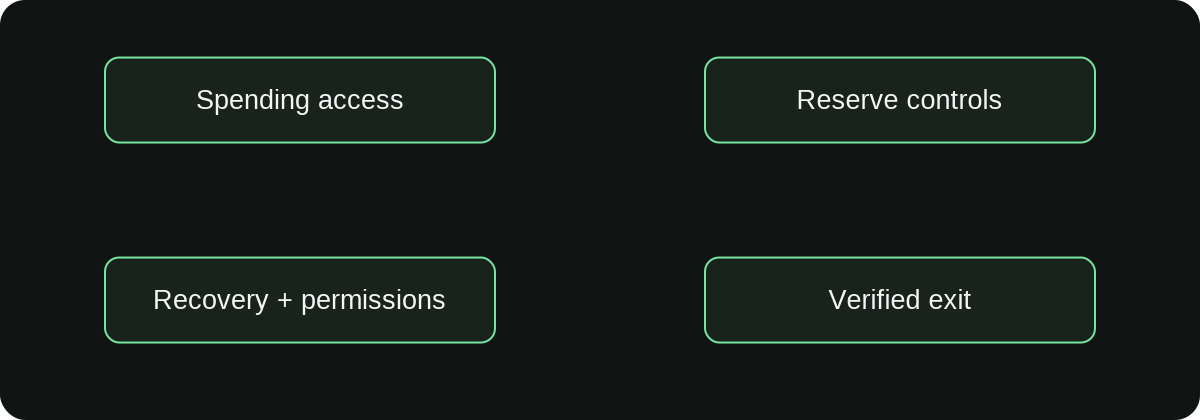
Establish the wallet through a verified channel
Obtain software or hardware through sources whose identity you can verify independently. Follow the provider’s genuine setup instructions and generate recovery material through the intended process. A prefilled phrase supplied by a stranger or reseller does not create exclusive control.
Protect recovery information from screenshots, casual cloud storage, shared messages and unauthorized physical access. Use a backup method you can maintain and test without exposing the secret to an untrusted website or support agent.
A device check or absence of a warning cannot establish universal safety. MetaMask’s security-alert documentation explains that informational signals do not constitute a guarantee. Apply the same discipline to app ratings, browser extensions and a familiar-looking interface.
Verify the asset and network before depositing
A genuine wallet can hold a fake token or an unsupported bridge representation. Confirm the official asset identifier, network and intended wallet capability. A displayed symbol does not establish issuer backing or a functioning exit.
Read migration and deprecation notices, especially if the storage plan will remain unused for a long period. Circle’s native and bridged materials show why token versions can have different dependencies. A wallet display can continue to show an asset after a service changes its support.
Keep sufficient native fee currency where the chosen network and wallet require it. Holding only stablecoins can leave a user unable to submit the next transaction. Verify the applicable fee arrangement rather than assuming every chain charges fees in the stablecoin itself.
Review permissions rather than only connections
Connecting a wallet to an app and granting token spending rights are different actions. A spending approval can remain relevant after the browsing session ends. Disconnecting the interface should not be assumed to revoke every permission already granted.
Uniswap’s approval guide explains the purpose of token-spending authorization. Review the spender and allowance for contracts no longer needed, using a genuine tool and the correct network. A revocation is itself an action that requires careful signing and may incur a fee.
If the recovery phrase or private key is exposed, revoking one allowance is not a complete remedy. The attacker may retain signing control. Assess moving assets to a newly secured control environment through the provider’s genuine incident guidance rather than merely changing a local password.
Test recovery without giving away the secret
A backup is useful only if it can restore the intended wallet under the appropriate conditions. Verify the recovery procedure through official instructions and a controlled process. Do not type the secret into an unsolicited “validation” page to test it.
Record nonsecret details such as network, public address and the wallet setup needed to find the assets. A restored wallet can show an empty interface if the wrong account or network is selected, even when the blockchain balance remains at the correct address.
Plan for device failure and personal incapacity as well as theft. Any trusted-contact or inheritance arrangement needs protection against both premature access and permanent loss. Avoid storing all instructions and all secrets in one casually accessible message.
Preserve the exit and the evidence
Review whether the stored token can still reach a supported exchange, issuer route or recipient. A long storage period does not guarantee that the original provider, network integration or account eligibility remains unchanged.
Maintain transaction identifiers, acquisition records and relevant notices separately from the secrets. These records can support reconciliation or tax reporting without granting spending power. Do not publish a recovery phrase as part of proving ownership or asking for help.
The risk map covers the exposures a wallet cannot solve. Issuer backing, legal restrictions, depegs and application solvency remain distinct. Secure storage should reduce avoidable access risk while keeping those residual exposures visible.
Frequently asked questions
Should I interact with an unexpected token or NFT that appears in the wallet?
No action is required merely because an unsolicited asset appears. Avoid following embedded links or signing a claim transaction. Verify any genuine entitlement independently before interacting with an unfamiliar contract.
Can a wallet update change where my tokens are recorded?
The tokens are recorded on the relevant blockchain, while the software displays and manages access. An interface change can affect visibility or functionality. Check the public address and genuine provider guidance before assuming an update moved the funds.
Does a public address reveal the recovery phrase?
It should not function as a recovery secret, but sharing it can reveal transaction history and link activity to an identity. Protect privacy and avoid publishing more account context than a legitimate task requires.