
A stablecoin is a digital token designed to track a reference value, often one US dollar. The target is called its peg. A stablecoin can trade away from that target, and owning one is different from holding an insured dollar deposit at a bank.
That distinction matters before you buy, send or lend the token. The issuer, reserve arrangement, blockchain and service holding it can each affect whether you can access your funds and how much you receive when you leave the position.
What the token promises and what the market offers
A dollar stablecoin aims to make one token worth one dollar under its design and terms. Its market price is what another participant will pay on a particular venue. Its redemption arrangement describes a separate route for exchanging eligible tokens through the issuer or an authorized service.
Those routes can have different conditions. Direct redemption may require account approval, identity checks, a supported bank relationship and minimum amounts. A retail exchange can instead sell your tokens to another market participant, with a spread and fees.
The Bank of England’s explanation describes the relationship between private issuers, backing and digital wallets. For a particular token, the legal terms and supported redemption route determine the holder’s practical position. A general definition cannot establish that everyone can redeem every token immediately at face value.
How different designs support the target
Fiat-reserve stablecoins rely on assets such as cash and short-term securities held under the issuer’s arrangement. Crypto-collateralized designs use assets and mechanisms that may include excess collateral and liquidation. Algorithmic or synthetic designs can depend on incentives, hedging or other market relationships.
The names do not provide complete risk classifications. A token may combine several mechanisms, and a reserve can contain assets with different liquidity or valuation characteristics. Read how the design handles falling collateral values, redemption demand and operational interruptions.
| Design question | Why the answer matters |
|---|---|
| What supports the target? | Identifies the assets or market mechanisms that must work |
| Who controls key decisions? | Shows where governance or administrative power sits |
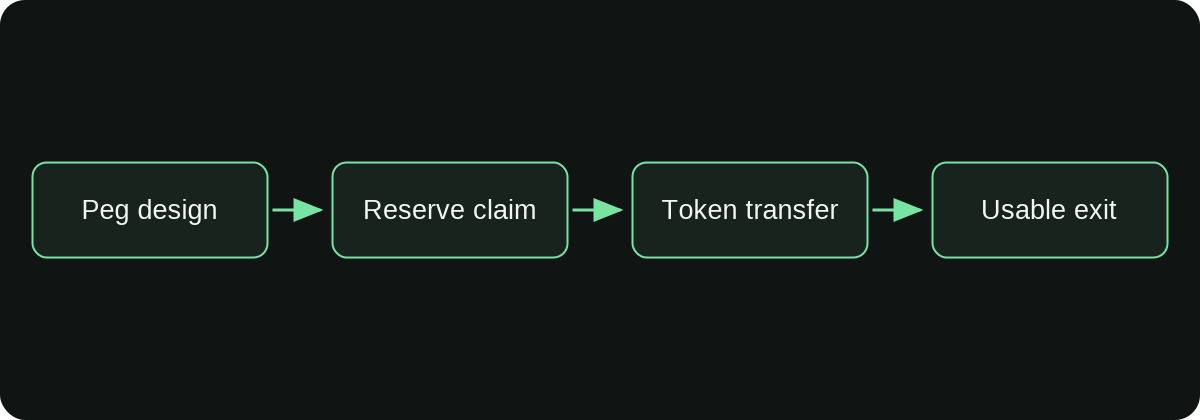
| How do holders exit? | Connects backing with an available redemption or market route |
| What happens under stress? | Reveals dependence on liquidity, collateral sales or external markets |
A claim of full backing should be checked against its definition, date and evidence. It is not enough to see a token logo, a reserve chart or the word decentralized in a description.
What stablecoins are useful for
Stablecoins can move value between compatible wallets, provide a quote asset for trading or serve as a settlement asset in applications. Some users employ them in cross-border payment routes, where the token transfer is only one part of the process.
A recipient who needs local bank money still requires conversion and a permitted withdrawal channel. The total cost can include buying the token, sending it, receiving it, converting it and withdrawing. A low blockchain fee does not establish that the whole route is inexpensive or available.
For trading, a stablecoin can reduce exposure to a volatile coin while leaving issuer, custody and token risks. It is not the same as exiting to a bank deposit. If your spending currency is different from the peg currency, exchange-rate changes can also affect purchasing power.
Why the network and token version matter
The same brand can appear on several blockchains. Sending requires a supported token on a network the recipient can actually receive. A familiar-looking address or ticker does not establish compatibility.
Native issuance and bridged representations can also differ. A bridge may lock an asset and create another token with additional dependencies. Circle’s bridged-USDC documentation explains why a bridged version should not automatically be treated as the same issuer-level claim as native USDC.
Check the official token identifier and network, then compare them with the destination’s current deposit instructions. Where appropriate, a small test can help validate the operational route. It cannot establish that the issuer will remain solvent or that a later transfer will face unchanged conditions.
Stable value is not protected savings
The dollar target does not insure the token against issuer failure, exchange insolvency, wallet theft or a contract exploit. The FDIC’s deposit guide distinguishes insured deposits from crypto assets and other nondeposit investments.
A stablecoin may also be frozen or restricted under its administrative and legal framework. Self-custody protects against some intermediary risks but does not necessarily remove issuer controls. Lending the token adds another borrower or application relationship beyond merely holding it.
Rewards need their own explanation. Holding a stablecoin does not universally generate interest. A platform may offer a promotion, lend assets or use another strategy, each with terms and risks. The percentage on a rewards screen is not a property guaranteed by the token’s peg.
A first-use checklist that follows the money
Start with the task: transferring a specific amount, buying another asset or keeping funds available for a near-term payment. Choose the token and route only after confirming that both the entry and exit work for your location and account.
Next inspect the issuer’s disclosures and reserve evidence, then verify custody, token identity and network support. Calculate the expected amount received after the full route, including conversion costs and any withdrawal minimum. Do not commit funds needed for essential expenses to an untested exit.
Use the buying guide for order preparation, the risk map for exposure checks and the reserve-proof procedure for documentary evidence. These are separate decisions: a genuine token can still be unsuitable for the particular task.
Keep transaction records, token identifiers and source dates. They help reconcile a transfer, investigate a problem and prepare any required tax reporting. A stable display price does not eliminate those recordkeeping needs or make every swap economically or legally inconsequential.
Frequently asked questions
Can a stablecoin be tied to something other than the US dollar?
Yes. A design can reference another currency or asset. Identify the actual reference and legal structure rather than assuming every token labeled stable is interchangeable with a dollar stablecoin.
Does holding ten stablecoins mean I have ten bank accounts?
No. Tokens can share issuers, reserve institutions, blockchains or service providers. Count the underlying dependencies rather than treating each symbol as a separate protected account.
Why does my wallet show a dollar balance when I hold tokens?
The wallet may multiply token units by a price feed. That display is an estimate of value, not confirmation that the same amount of bank money is available for immediate withdrawal. Check the conversion route separately.